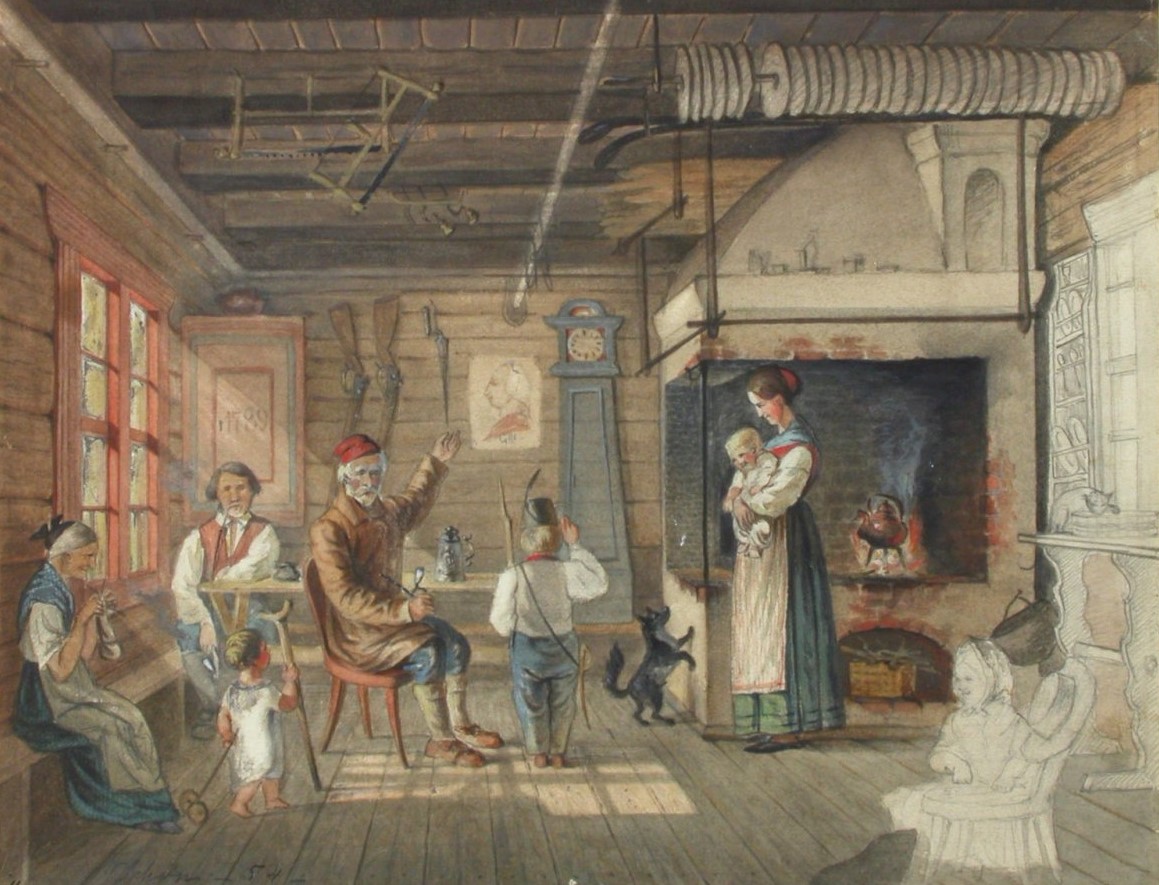
Boatswain´s rote
The Swedish King Gustav Wasa establish a system in the 16th century whereby soldiers were recruited on a voluntary basis by offering them a croft and a piece of land. The system evolved over time, and in 1619 Gustav II Adolf issued a decree whereby one in ten men were to be conscripted. Lists of local men were maintained by the clergy.
In addition to soldiers and cavalry for the army, the expanding Swedish navy also required boatswains. In the 1634−1640 period, twelve companies were established in the coastal villages. Southwestern Finland constituted the Company of Southern Finland, which included Pargas and Kimito. The Company of Åland included Nagu, Korpo, Rimito (Rymättylä) and Tövsala (Taivassalo). The Finnish companies were later merged into the Navy Company of Åland and Southern Finland. Farms were required to form a type of consortium called rote, each corresponding to a minimum of two manttaali (a unit of land) and responsible for funding one rote boatswain. The most suitable farm was chosen as the rote farm where the boatswain’s croft was usually set up. A navy soldier’s croft was considered to be joint property of the village.
A boatswain’s pay
According to the 1690 decree, each boatswain was to receive an annual pay of 2 riksdaler and 3 skillings. The croft had to include enough arable land to produce two barrels of grain per year, and a meadow that could produce two loads of hay. In addition, the rote farmers were expected to help the wives of navy boatswains when the men were fighting in a war or stationed elsewhere. The size of the croft building was eight ells from corner to corner, and it had a porch. The croft also included a granary, barn and a shed for two cows.
Boatswains received three types of assistance. The first assistance package consisted of an overcoat, a suitcase, a hammock and a rug, and it had to last three years of service. A second package was issued each time a boatswain was sent on a mission that lasted three months or longer. This package included a jumper, a vest, trousers, a scarf, a hat, one pair of leather boots, two pairs of woolly socks and two shirts. The third package consisted of one pair of boots and socks, and it was issued for missions lasting between three weeks and two months. The rote farms sometimes complained about the cost of equipping the boatswains, especially when a single rote had to supply several boatswains in a short space of time if the nay soldiers died in quick succession.

